FPEhub

White Label Payment Gateway: Architecture & PSP Launch Guide

White Label Payment Gateway: Architecture, Use Cases, and How to Launch Your Own PSP

A white label payment gateway is the foundation for building a proprietary payment business. For PSPs, fintech companies, marketplaces, and regulated platforms, it enables full control over payment flows, branding, routing logic, and revenue models.

Unlike SaaS gateways, a white label payment gateway is not a third-party tool layered onto a business. It is a core infrastructure component owned and operated by the platform itself. This ownership fundamentally changes scalability, compliance, and strategic flexibility.


Payment Platform Ownership: How Architecture Controls the Business

Payment Platform Ownership: Why Architecture Determines Who Controls the Business

In payment platforms, ownership is often associated with licenses, legal entities, or contractual relationships with providers. In practice, however, real ownership is defined elsewhere. It is determined by architecture.

Many payment businesses legally own their company, brand, and regulatory approvals, yet operate platforms whose critical decisions are controlled by external systems. Over time, this architectural reality defines what the business can change, scale, or optimize. Architecture quietly becomes the mechanism that determines who actually controls the platform.

How to Become a Payment Service Provider (PSP): Architecture, Licensing & Infrastructure

How to Become a Payment Service Provider (PSP): Architecture, Licensing & Infrastructure

To become a payment service provider is a fundamentally different ambition than simply accepting payments. Many fintech teams reach this point after MVP success, platform growth, or regional expansion. At that stage, relying on third-party PSPs starts to limit control, margins, and product flexibility. However, becoming a PSP is not a branding exercise. It is an infrastructure commitment.

Why Payment Platforms Fail After MVP & How to Scale

Why Payment Platforms Fail After MVP (And How to Scale Properly)

Payment platforms fail most often not at launch, but immediately after MVP success. Early traction creates a false sense of stability. Transactions go through, merchants onboard, revenue appears. However, the underlying system was never designed for scale. As a result, growth exposes architectural weaknesses that were invisible during validation.

At MVP stage, platforms optimize for speed. They prove demand. They confirm willingness to pay. Unfortunately, they also accumulate structural debt. When volume increases, integrations multiply, and regulation tightens, that debt turns into systemic failure.

Payment Service Providers: Roles, Functions & Benefits

Payment Service Providers: Role, Functions, Benefits, and How to Become One

Payment service providers form the operational backbone of modern digital payments. They sit between merchants, platforms, financial institutions, and payment rails, abstracting complexity while enabling scale. Over the last decade, the role of PSPs has evolved significantly. What once looked like simple payment acceptance has turned into a sophisticated infrastructure layer responsible for routing, risk control, compliance, and settlement.

Payment Orchestration for PSPs, EMI & Marketplaces

Payment Orchestration for PSPs, EMI & Marketplaces

Payment orchestration for PSPs becomes critical once payment volume, regulatory pressure, and provider dependency increase. At early stages, basic routing may seem sufficient. However, as platforms scale, fragmented logic and static integrations quickly turn into operational risk.

For PSPs, EMI projects, and marketplaces, orchestration is not a feature. Instead, it is the control layer that determines how payments behave under real conditions. Therefore, understanding orchestration through segmentation is essential.

Smart Payment Routing vs Rule-Based Routing

Smart Payment Routing vs Rule-Based Routing

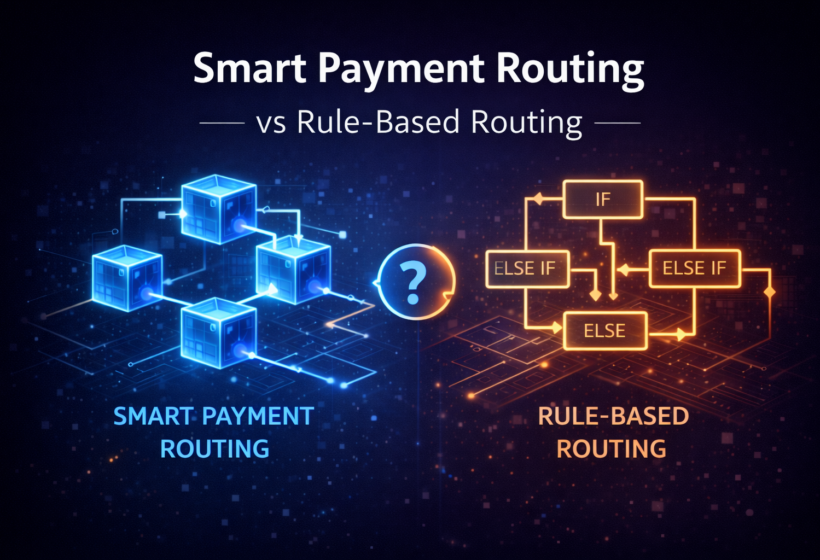
mart payment routing is not an optimization trick. It is an architectural response to scale, volatility, and provider dependency. As payment ecosystems grow more complex, static routing rules stop working. Therefore, the difference between smart routing and rule-based routing becomes a critical design decision.