
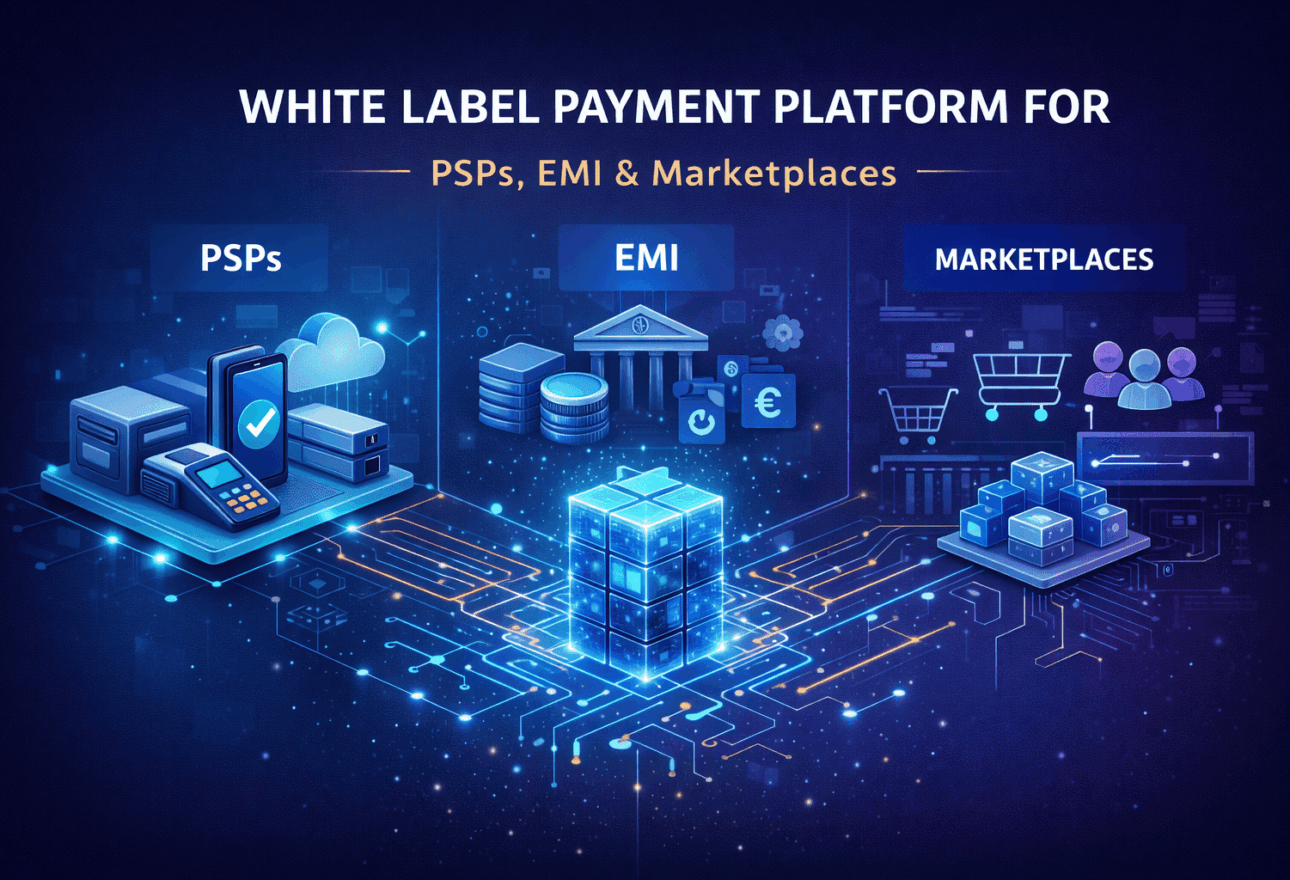
White label payment platforms are not one-size-fits-all systems.
However, they can support very different business models.
PSPs, EMI projects, and marketplaces operate under distinct rules.
They face different regulatory, operational, and scaling challenges.
Therefore, platform architecture must adapt to each model.
This is where white label infrastructure proves its value.
Why One Platform Can Serve Different Fintech Models
At first glance, PSPs, EMI, and marketplaces look similar.
All of them process payments.
However, their internal logic differs significantly.
So do their compliance obligations.
A modern white label payment platform separates core infrastructure from business logic.
As a result, the same system can power multiple fintech models.
Configuration replaces rebuilding.
Architecture replaces improvisation.
White Label Payment Platform for PSPs
Payment service providers focus on transaction processing.
Speed, reliability, and routing flexibility are critical.
PSPs often work with multiple acquiring banks and payment methods.
Therefore, smart routing becomes a core requirement.
A white label platform allows PSPs to:
- Connect multiple providers through a single interface
- Apply routing rules dynamically
- Monitor performance in real time
In addition, compliance controls are embedded directly into flows.
This reduces operational friction.
As a result, PSPs scale faster without increasing technical complexity.
White Label Payment Platform for EMI Projects
EMI projects operate under stricter regulatory oversight.
They manage accounts, balances, and user identity.
Therefore, compliance is not optional.
It is structural.
White label platforms designed for EMI use cases include:
- Account and wallet logic
- Transaction monitoring
- Reporting and audit trails
Moreover, multi-currency support is native.
This is essential for cross-border operations.
Because compliance logic is already embedded, EMI teams avoid constant rebuilds.
They can focus on licensing and partnerships instead.
White Label Payment Platform for Marketplaces
Marketplaces introduce a different challenge.
They manage multi-party payment flows.
Funds must be split, settled, and reconciled correctly.
Timing matters.
White label platforms support marketplaces through:
- Sub-account structures
- Controlled fund flows
- Automated settlements
For example, payouts can be delayed or conditional.
This depends on platform rules.
As a result, marketplaces gain financial control without building custom infrastructure.
Handling Different Regulatory Scopes
PSPs, EMI projects, and marketplaces operate across jurisdictions.
Each region applies different rules.
Therefore, regulatory adaptation must be flexible.
A white label platform abstracts compliance logic.
Rules are configured, not hardcoded.
In addition, reporting adapts per jurisdiction.
This reduces legal risk.
As a result, expansion becomes predictable.
Operational Control Across Business Models
Regardless of the model, operational visibility is essential.
Teams must see what happens inside the system.
Admin dashboards provide:
- Merchant and user management
- Limit control
- Risk monitoring
Moreover, every action is logged.
This supports audits and investigations.
Control is centralized, even when business logic differs.
Extending the Platform with Custom Logic
White label does not mean restrictive.
Modern platforms expose extension layers.
Custom workflows can be added safely.
They do not compromise the core.
This is where custom fintech integrations come into play.
They allow differentiation without rebuilding.
As a result, businesses evolve beyond standard use cases.
Why FPEhub Fits Multiple Fintech Models
FPEhub designs white label platforms as modular systems.
Not as fixed products.
We start from architecture.
Then we adapt it to your model.
PSP, EMI, or marketplace — the core remains stable.
Business logic evolves on top.
Therefore, clients avoid platform lock-in.
They gain long-term flexibility instead.


