FPEhub

White Label Payment Gateway for Global Expansion Explained

White Label Payment Gateway for Global Expansion: Regions, Currencies & Local Acquirers

Global expansion is one of the most difficult stages for any payment-driven platform. At an early stage, many fintechs rely on a single acquiring setup and limited geographic coverage. However, this approach quickly breaks down as volumes grow and new markets are added. For this reason, platforms that plan international scale increasingly rely on a White Label Payment Gateway model built for multi-region operations.

High-Risk Payment Gateway in a White Label Model Explained

High-Risk Payment Gateway in a White Label Model: How Risk Is Actually Managed

High-risk payments require a fundamentally different infrastructure approach. While many platforms attempt to process high-risk traffic through standard payment setups, these models rarely survive at scale. As a result, fintech companies working with regulated or volatile verticals increasingly rely on a White Label Payment Gateway designed specifically for high-risk environments.

White Label Payment Gateway vs Payment Aggregator: Key Differences

White Label Payment Gateway vs Payment Aggregator: Control, Risk & Business Model

Fintech companies entering the payments market often face a strategic decision: launch a White Label Payment Gateway or rely on a Payment Aggregator. Although both approaches enable payment acceptance, they represent fundamentally different business models. As a result, they lead to very different outcomes in terms of control, risk exposure, scalability, and long-term ownership. At […]

White Label Payment Gateway: Architecture & PSP Launch Guide

White Label Payment Gateway: Architecture, Use Cases, and How to Launch Your Own PSP

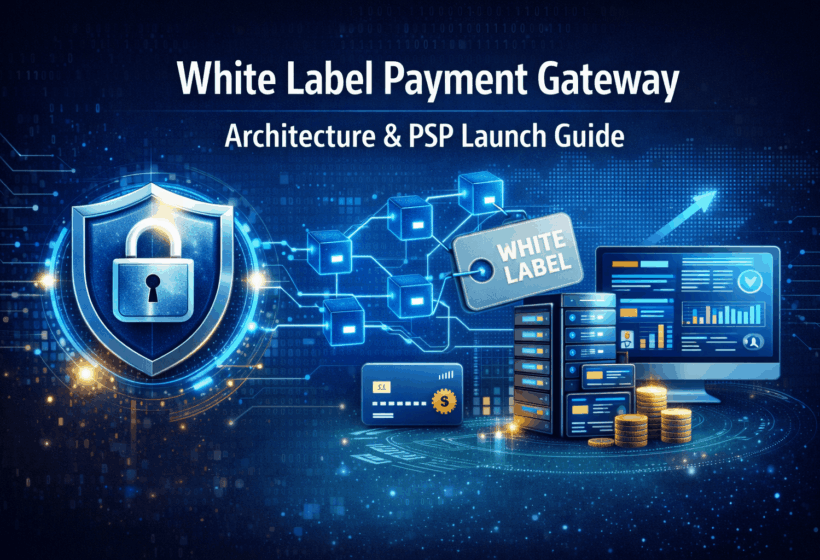
A white label payment gateway is the foundation for building a proprietary payment business. For PSPs, fintech companies, marketplaces, and regulated platforms, it enables full control over payment flows, branding, routing logic, and revenue models.

Unlike SaaS gateways, a white label payment gateway is not a third-party tool layered onto a business. It is a core infrastructure component owned and operated by the platform itself. This ownership fundamentally changes scalability, compliance, and strategic flexibility.

Payment Platform Ownership: How Architecture Controls the Business

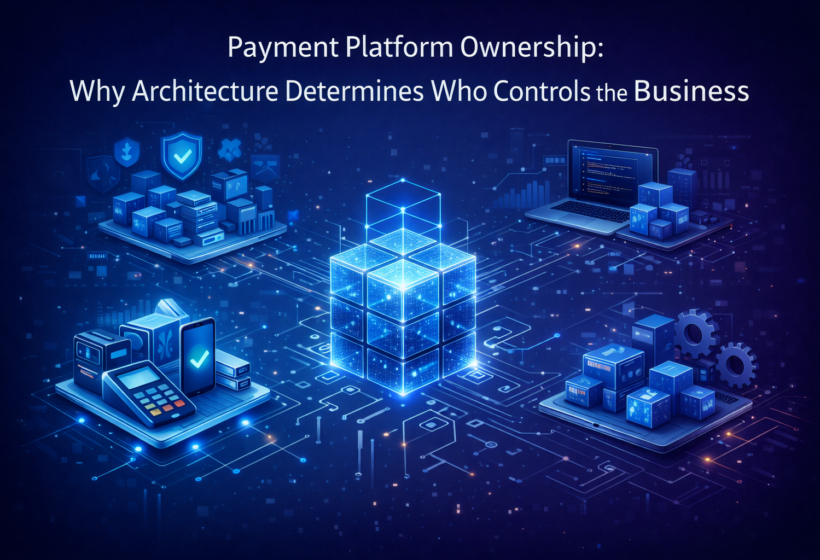
Payment Platform Ownership: Why Architecture Determines Who Controls the Business

In payment platforms, ownership is often associated with licenses, legal entities, or contractual relationships with providers. In practice, however, real ownership is defined elsewhere. It is determined by architecture.

Many payment businesses legally own their company, brand, and regulatory approvals, yet operate platforms whose critical decisions are controlled by external systems. Over time, this architectural reality defines what the business can change, scale, or optimize. Architecture quietly becomes the mechanism that determines who actually controls the platform.